Product teams usually start looking to outsource UX design when their current setup stops keeping up with the product. Delivery slows down, feature work piles up, and UX becomes a bottleneck across discovery, validation, interface decisions, and handoff. In some teams, one designer ends up stretched across too many workstreams. In others, the team understands the product well but lacks the depth needed for redesigns, complex flows, or scaling work.
That is where UX design outsourcing becomes a practical operating decision, not a shortcut. It gives product teams a way to add focused capacity, bring in missing expertise, and move faster without turning every new need into a long hiring cycle. The useful question is not whether outsourcing is “good.” The real question is whether it solves a clear delivery or capability gap better than hiring, delaying work, or overloading the current team further.
When In-House UX Stops Scaling
In-house UX usually stops scaling before the team says it directly.
The first signal is bottlenecks.
Too much work depends on too few people. Discovery, flows, wireframes, UI decisions, design QA, stakeholder reviews, and developer support all compete for the same time. Work still moves, but it moves slower than product planning assumes.
The second signal is shallow specialization.
Many teams have strong generalists, but not every team has the right depth for conversion-heavy redesigns, onboarding optimization, enterprise workflows, or new feature validation under pressure. The issue is not weak talent. The issue is that product demand becomes more specific than the current team structure.
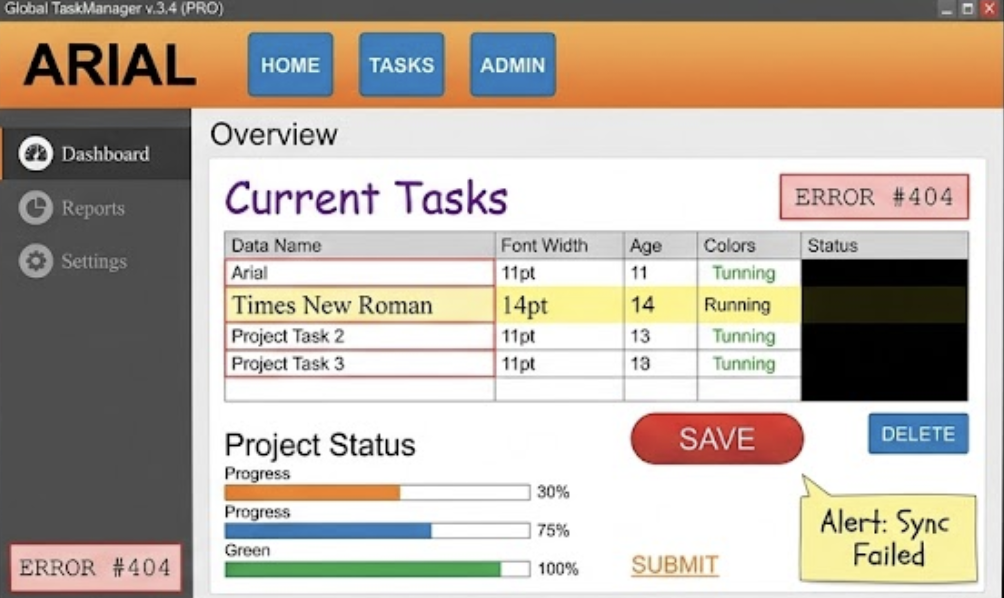
The third signal is design debt.
Teams start shipping “good enough” flows because there is no room for deeper iteration. That usually shows up as inconsistent screens, awkward navigation, unclear multi-step actions, and more PM or engineering effort spent compensating for UX gaps later.
The fourth signal is management drag.
Product leads, founders, or engineering managers start doing too much design coordination themselves. They write over-detailed briefs, resolve avoidable UX questions, and spend time unblocking work that should have moved independently.
At that point, the problem is not whether the internal team is talented. The problem is that the operating model no longer matches the workload.
When Outsourcing Actually Makes Sense
UX outsourcing makes sense when the team has a defined problem and the cost of waiting is higher than the cost of external support.
A redesign is one of the clearest cases. Redesign work creates a temporary spike in UX demand: auditing current flows, restructuring screens, simplifying user journeys, rethinking hierarchy, and aligning design with engineering constraints. Most teams do not need permanent extra headcount for that. They need concentrated execution for a defined scope.
New feature validation is another strong case. Product teams often know what they want to build, but they need faster UX thinking around flow structure, friction points, and decision paths before development moves too far. Outsourced UX designers can help turn assumptions into testable interface decisions without pulling internal product and design resources away from core priorities.
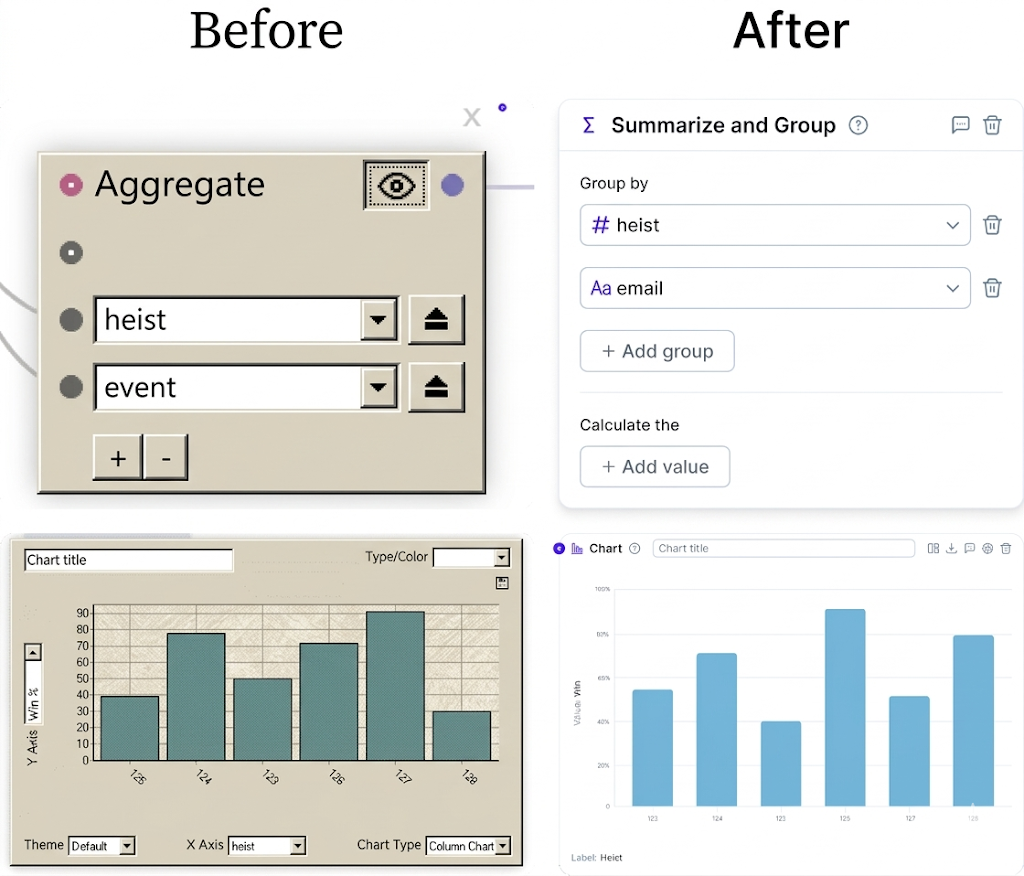
Scaling is another practical trigger. As products grow, small UX issues become larger system issues: onboarding breaks under more use cases, settings become messy, dashboards lose clarity, and patterns drift across the product. That is often where external support is most efficient, especially when the team also needs stronger work around design systems, reusable patterns, or more consistent handoff. Resources like NN/g’s guide to design systems and Material Design are useful reference points when teams need more consistency at scale.
Outsourcing also makes sense when speed matters more than org expansion. Hiring takes time, onboarding takes time, and ramping a new in-house designer takes even more time. If the team needs stronger UX execution this month, not next quarter, an external team is often the faster path.
What outsourcing does not solve is missing product ownership. If the product side is unclear on priorities, goals, or decision-makers, no external UX partner will fix that.
Common Concerns About UX Outsourcing
The common objections to UX design outsourcing are valid. Most of them are not myths. They are management risks.
Loss of control usually happens when scope is vague, review points are irregular, and nobody has clear decision rights. Good outsourcing does not reduce control. It makes control explicit. Who approves flows? Who gives consolidated feedback? What gets reviewed weekly? What counts as final?
Communication problems are also real, but they are usually process problems rather than geography problems. External teams work well when the workflow supports written context, documented decisions, and asynchronous communication instead of relying on constant meetings. This matters even more when product, design, and engineering already work across time zones or distributed schedules. Helpful reference points here include NN/g on remote UX work and Atlassian’s guide to asynchronous communication.
Quality concerns are the most reasonable objection. External quality varies a lot. But quality is not hard to evaluate if the team knows what to look for. Do they improve task flow or just decorate screens? Can they explain trade-offs? Do they think in systems, not isolated mockups? Can engineering work from what they deliver without guessing?
Product context gaps are normal. No external team starts with the same context as an embedded internal designer. The useful question is how quickly they absorb the right context and start making useful decisions. Strong partners ask sharp questions early, identify missing information fast, and do not need endless hand-holding to begin.
How Outsourced UX Teams Work (In Practice)
The best outsourced UX teams work like an extension of the product team, not a detached vendor lane.
A practical setup usually starts with a structured input phase:
- product goals
- known friction points
- current flows or screens
- technical constraints
- team roles
- deadlines
- priorities
From there, work becomes operational. The external team translates that input into a delivery structure with clear outputs, checkpoints, and ownership.
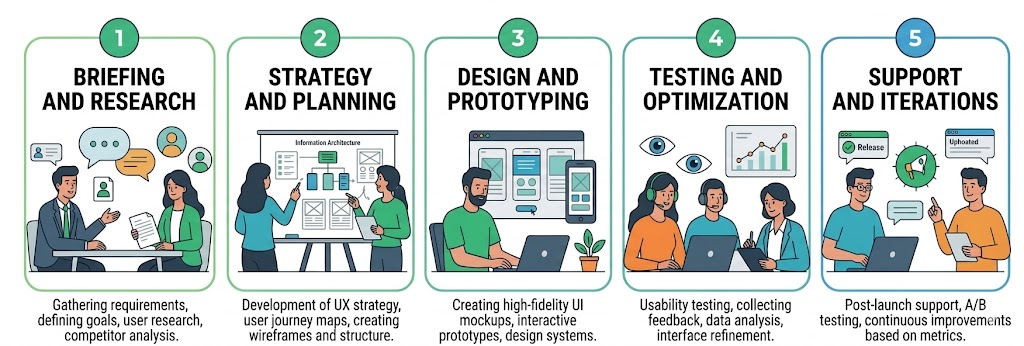
In practice, the workflow usually looks like this:
1. The product team defines the business and product context.
The team explains what is changing, why it matters, what constraints exist, and what decisions need support.
2. The UX partner scopes the work.
They break the problem into concrete tasks: audit, flow review, wireframes, design direction, component use, or handoff preparation.
3. Work moves through async review and live alignment.
Most feedback happens in tools such as Figma, Notion, Jira, Linear, or Slack. Live calls are used for decisions, not for replacing structure.
4. Outputs are delivered in implementation-ready form.
Not just polished screens, but reasoning, annotations, flow logic, and enough clarity for engineering to execute without guesswork.
That model works because it reduces ambiguity. It gives product managers, designers, and engineers a clear lane for collaboration.
Integration matters here. The right partner does not ask the team to rebuild its process around them. They fit into the existing workflow, review cadence, and documentation habits. That is what keeps external support from becoming coordination debt.
In-House vs Outsourced UX
There is no universal winner. There is only the better model for the current constraint.
Cost
In-house is usually stronger when design demand is steady, broad, and central to daily product work. Outsourcing is more efficient when the need is temporary, specialized, or uneven.
| Germany (In-house) | Outsourcing (Europe / Remote) | |
|---|---|---|
| Cost level | Higher total cost | More cost-efficient |
| Average annual salary | €55,000 – €75,000 (mid-level) €75,000 – €95,000+ (senior) | Not fixed (based on scope and model) |
| Typical rates | €80 – €150/hour (agency / senior) | €40 – €80/hour (Eastern Europe, agencies & freelancers) |
| Monthly cost | €5,000 – €9,000+ (salary only, excluding overhead) | ~€3,000 – €7,000 (dedicated designer, flexible setup) |
| What you pay for | Salary, taxes, benefits, office, equipment, hiring, onboarding | Actual work delivered, flexible allocation, no fixed overhead |
| Setup time | Weeks to months (hiring + onboarding) | Days to weeks (depending on scope) |
| Flexibility | Low (fixed team, harder to scale quickly) | High (easy to scale up/down) |
| Access to expertise | Limited to hired team | Broader (multiple projects, cross-domain experience) |
Speed
Outsourcing usually wins on time to start. Hiring wins only if the role is already filled and ramped. If the team needs support this month, external help is usually faster than recruiting and onboarding.
Flexibility
Outsourcing is easier to scale up or down. That matters for redesigns, launches, experiments, and temporary pressure spikes. In-house is less flexible but better for continuous embedded collaboration.
Expertise depth
An internal designer often has deeper product context. An external team often has broader pattern exposure across different products and problems. If the gap is domain context, keep it close. If the gap is execution depth or specialist experience, outsourcing usually gives faster access.
Management overhead
Bad outsourcing creates overhead. Good outsourcing reduces it. The deciding factor is not location. It is process maturity. If the external team requires constant correction, the model fails. If they bring structure, momentum, and reusable thinking, the model works.
What to Look for in a UX Partner
Do not choose a UX partner based on visual style alone. Choose based on execution quality and workflow fit.
First, look for process clarity. They should be able to explain how work starts, how scope is handled, how reviews happen, what deliverables you get, and how they manage change. If the process sounds vague, execution usually will be too.
Second, look for relevant case studies. Not just polished screens. Look for examples where they simplified flows, improved structure, reduced friction, or supported product delivery in a measurable way.
Third, check workflow compatibility. Can they work inside your tools? Can they handle written feedback well? Can they operate without constant supervision? Strong partners plug into product and engineering workflows instead of creating parallel chaos.
Fourth, assess systems thinking. If your product is growing, the team should understand consistency, reuse, and scale. That is where experience with design systems matters.
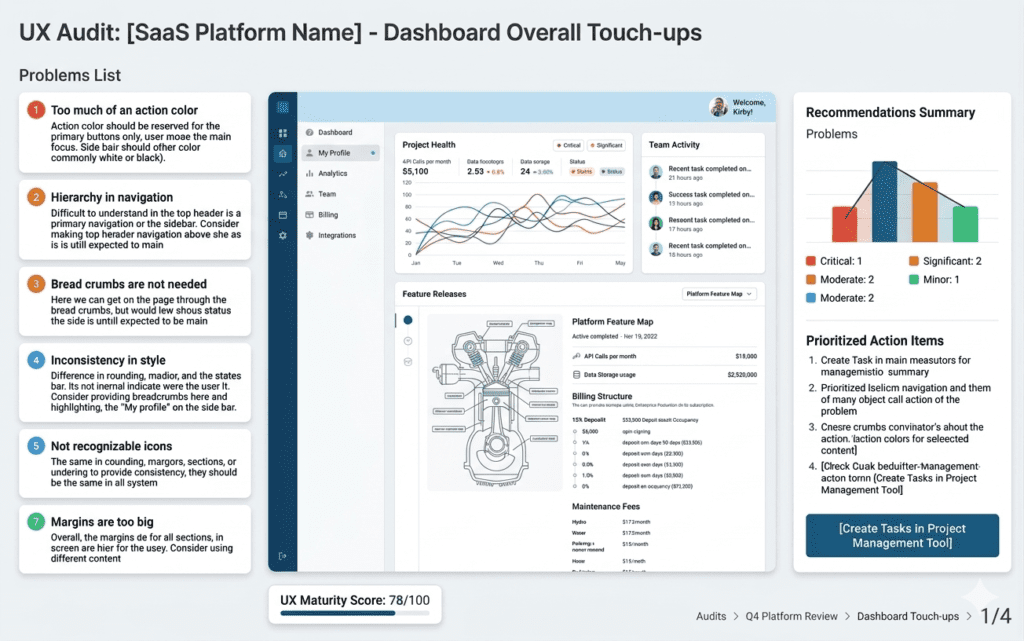
Fifth, test with a contained scope if needed. A focused audit, a small feature flow, or a redesign sprint is often the best way to evaluate collaboration quality before committing further.
Outsourcing UX is not about replacing an in-house team. It is about solving a specific capacity or expertise gap without slowing product delivery down further.
If your designers are overloaded, your roadmap is outpacing internal bandwidth, or your product needs stronger UX execution than the current setup can support, outsourcing is a rational option. Not because it is automatically cheaper. Not because external teams are automatically better. But because, in the right situation, it is the fastest and cleanest way to restore delivery quality.
That is the real decision: not “Should we outsource UX in theory?” but “Does external UX support solve our current bottleneck better than hiring, delaying, or stretching the team again?”
How Teams Typically Work with External UX
Dedicated Team
Used when you need consistent UX capacity over time.
This model works best for:
- ongoing product development
- scaling UX across multiple workstreams
- redesigns that require continuous iteration
- building or maintaining design systems
You get a fixed team embedded into your workflow (Figma, Jira, Slack, etc.), working alongside product and engineering.
The setup is predictable:
- fixed monthly cost
- stable team composition
- continuous delivery without re-scoping every task
Typical structure:
- 1–2 UX/UI designers
- optional senior oversight (UX lead / director)
- flexible allocation based on roadmap priorities
This model reduces coordination overhead and works well when UX is a continuous part of delivery, not a one-time need.
Time and Material
Used when the scope is not fully defined or work is short-term.
This model fits:
- UX audits
- new feature validation
- small redesigns or flow improvements
- exploratory work before development
You pay for actual time spent, which allows:
- flexible scope
- fast start without long planning cycles
- ability to adjust direction as work progresses
Typical use:
- test a feature idea
- improve a specific flow
- validate assumptions before committing to build
How to choose
- If you have continuous UX workload → Dedicated Team
- If you have uncertain or limited scope → Time & Material
Most product teams use both:
start with Time & Material → move to Dedicated Team once the need becomes stable.
Pricing logic (simplified)
Cost is based on:
- team size
- level of seniority
- duration of engagement
For dedicated setups, this usually translates into a fixed monthly cost. For flexible work, it’s based on actual time spent.
Two common ways product teams work with external UX
Design-only collaboration
We design. Your team (or vendor) builds.
This setup works best when:
- you already have a development team
- you need stronger UX execution without changing your engineering setup
- you want to keep full control over implementation
The UX team focuses on flows, structure, and interface decisions, while your team builds based on clear, implementation-ready outputs.
Design + delivery (with partner team)
We design and coordinate implementation with a trusted partner.
This setup works best when:
- you don’t have a reliable development team
- you want a more integrated design-to-build process
- you need to reduce coordination overhead between design and engineering
Instead of managing multiple vendors, you get a more aligned process across design and development.
If your product team is hitting the same bottlenecks, it may be worth reviewing where external UX support would improve delivery speed, clarity, or execution quality before the next release cycle.
FAQ
How do outsourced UX teams integrate with product teams?
The best ones integrate into the existing workflow: Figma, Jira, Linear, Slack, Notion, async feedback, and scheduled review points. They should feel like an extension of the team, not a separate lane.
Is outsourcing UX slower than hiring in-house?
Usually no. If the team needs support this month, outsourcing is often faster than recruiting, onboarding, and ramping a new full-time designer.
How do you control quality with outsourced UX designers?
Use clear scope, defined review checkpoints, one accountable decision-maker on your side, and output-based evaluation. Judge quality by flow logic, clarity, and implementation readiness, not just visuals.
When should you not outsource UX?
Do not outsource UX when the product team itself lacks direction. If there is no clarity on priorities, goals, or ownership, external support will add noise instead of momentum.
What work is best kept in-house?
Work that depends on deep daily context, long-term product ownership, and constant cross-functional alignment is usually better kept in-house. Outsourcing works best for specialist gaps, redesigns, validation work, and capacity spikes.